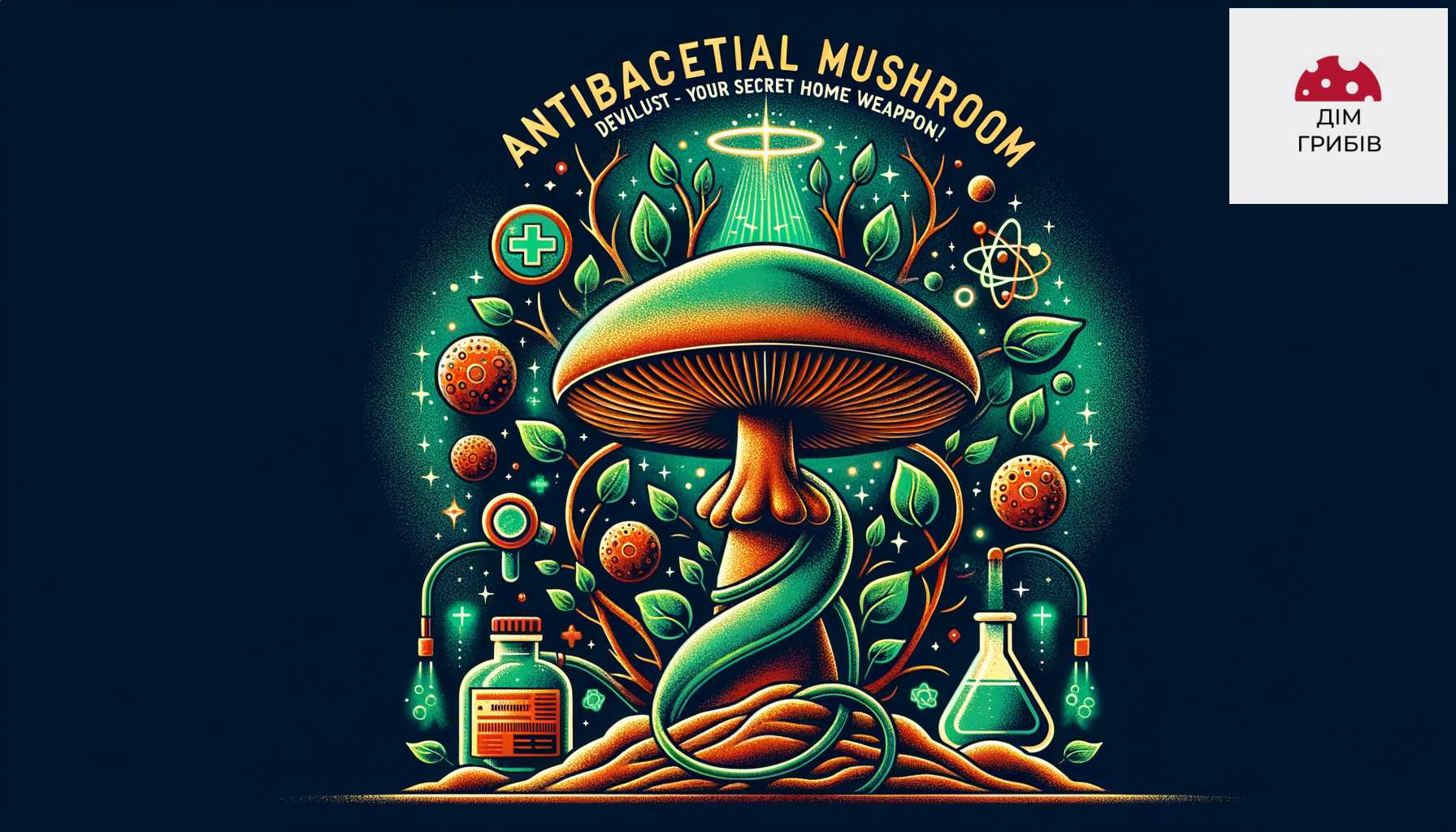
Antibacterial mushroom: devil's powder - your secret weapon at home!

The antibacterial power of the devil's powder mushroom
An antibacterial mushroom known as “devil’s powder” has attracted considerable interest among scientists and medical professionals. Mushrooms have long been used in folk medicine, and their antibacterial properties play an important role in combating a variety of infections. In this article, we will review the biology, antibacterial properties, clinical applications, and research prospects of this mysterious mushroom.
Basics of the biology of the devil's powder mushroom
Description and distribution of the fungus
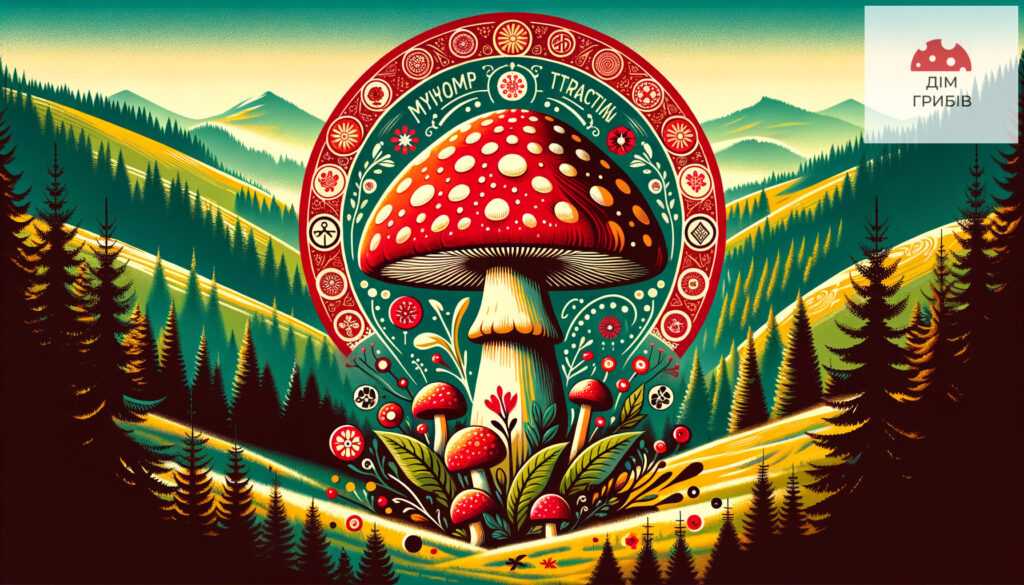
The “devil’s powder” mushroom may be a local or folk name for a specific type of mushroom that is grown in different regions. Visually, these mushrooms may have several characteristics, including:
- Quite large and fleshy cap, often with light or dark spots.
- Smooth texture that can be silky or fleecy.
- The leg, which often widens towards the base, is white or cream in color.
Devil's dust usually grows on stumps, old trees, or on the ground in the forest. It can be found in many cases in northern regions where the temperature and humidity are conducive to the development of the fungus.
Biochemical composition
The biochemical composition of the devil's powder mushroom still needs more serious research. However, it is known that many mushrooms contain active components, such as polysaccharides and phenolic compounds, which may give the mushrooms antibacterial properties.
The world of mushrooms is made up of a huge number of substances that can affect the consistency and characteristics of mushrooms. For “devil’s powder”, important factors are:
- Growth conditions that can change the biochemical composition.
- Combination with other herbal ingredients that can enhance its effect.
Antibacterial properties of the devil's powder mushroom
Mechanisms of action on bacteria
The antibacterial properties of “devil’s powder” have not yet been sufficiently studied, but similar mushrooms show significant activity against bacteria such as Staphylococcus aureus and Pseudomonas aeruginosaThe mechanisms by which fungi can influence bacterial flora are diverse:
- Fungi can produce antibiotics that kill bacteria at the molecular level.
- They can cause changes in the metabolism of bacteria, leading to their death.
Mushroom-based drugs and their research
Preliminary studies suggest that extracts of “devil’s dust” may have potential for the development of new antibacterial drugs. However, it is extremely important to conduct canonical clinical studies that will confirm these properties and explore the possibilities of use in medicine. In particular, the results obtained in laboratory conditions indicate that:
- Extracts may show activity against several resistant strains of bacteria.
- Studies have shown a reduction in bacterial counts after applying mushroom extracts.
Comparison with other antibacterial fungi
It is also interesting to compare “devil’s powder” with known antibacterial fungi, such as Pleurotus ostreatus (oyster mushroom). The difference may be in:
- Strength of action – some fungi have a greater effect on certain types of bacteria.
- Ease of preparation and use – some are easier to use in the preparation of natural medicines.
Compared to traditional medicine, antibacterial mushrooms such as “devil’s powder” can be a useful addition to established treatments, increasing the effectiveness of therapy.
The use of devil's powder mushroom in medical practice
Clinical studies and results
Unfortunately, there are few clinical studies in the scientific literature that directly examine the use of devil’s dust. However, similar mushrooms that contain β-glucans have shown significant positive results in the treatment of bacterial infections. Some studies have been conducted that confirm that:
- Mushrooms may be a promising alternative for treating antibiotic-resistant infections.
- They can boost the body's immunity, helping it fight infections.
Tips for home use
Using devil's powder at home can include making tinctures, decoctions, or adding it to dishes. Here are some tips for those planning to use this mushroom:
- Always consult a doctor or mycologist before using the mushroom.
- Do not exceed the recommended doses, as this may lead to undesirable effects.
- Use dried or fresh mushroom extracts to make tinctures.
- Watch for any allergic reactions after the first few uses.
Research and application prospects
Latest research in the field of mycology
Research in the field of mycology is actively ongoing, in particular, the possibility of using fungi as a source of new antibacterial agents is being studied. The emergence of new methods of synthesis and study of biologically active substances leads to an increase in the interesting effectiveness of fungi in treatment, as well as to the development of new drugs.
Problems and challenges of the scientific community
However, there are several challenges that scientists face:
- Effectiveness in resistance settings, when bacteria adapt to treatment.
- Regulatory regulation and safety of natural products, including mushrooms.
- The need to study the long-term effects of mushrooms on the human body.
Conclusion
The devil's powder mushroom has the potential to become an important antibacterial agent, but its properties still need to be studied in detail. Understanding the mechanisms of action, as well as proper use, can open up new possibilities for use in medicine. Do not forget that mushrooms, like devil's powder, in combination with traditional medicine can be a guarantee of health and effective treatment.
For those interested in mushroom picking, we invite you to visit our store House of Mushrooms, where you will find a large selection of mushrooms, including unique specimens for study and application! You can also find more detailed information in the article about the features of the peribone clinic and research into the antibacterial properties of mushrooms.